Premaasi
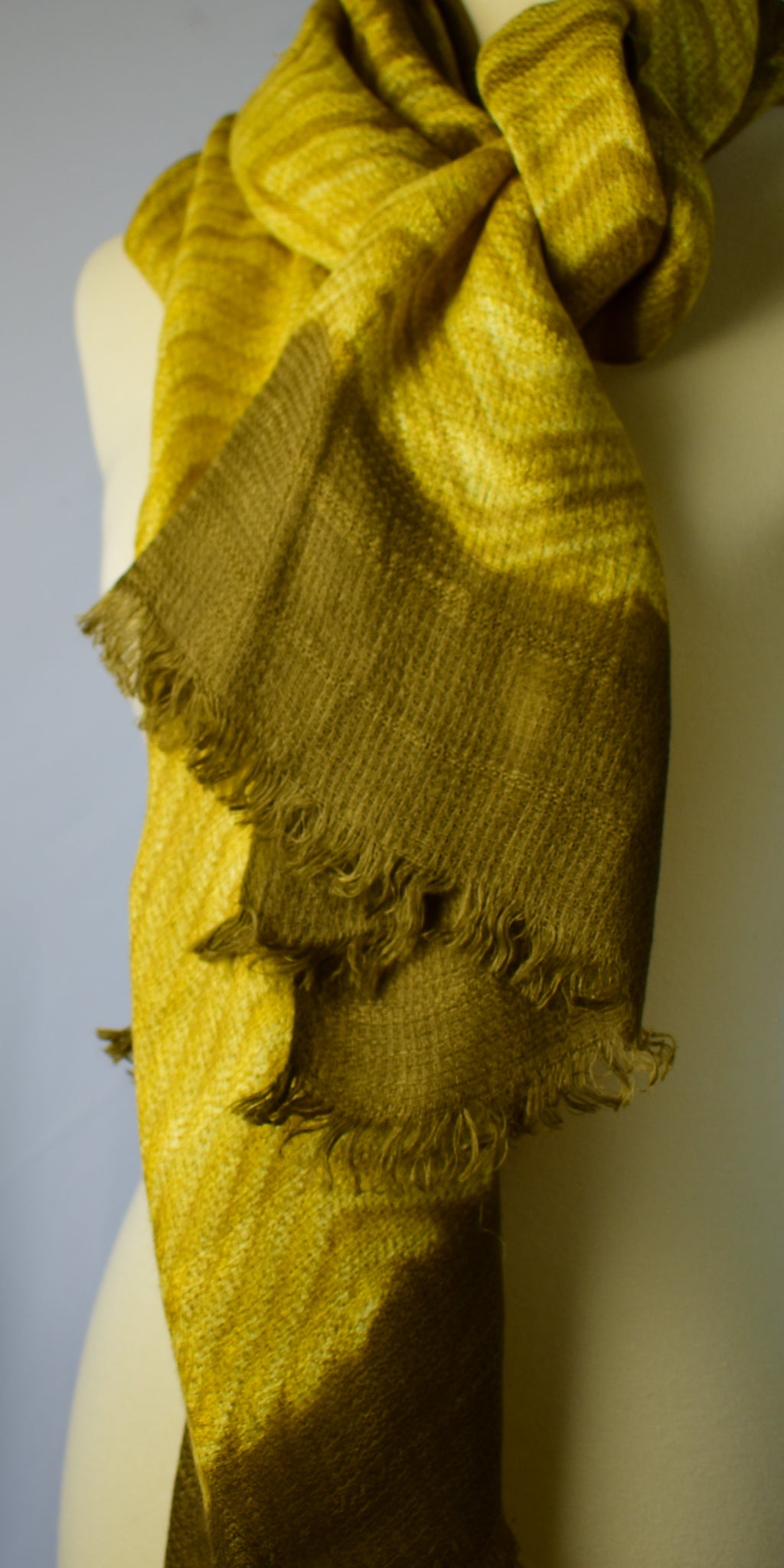
Linen Shibori Scarf — Mustard and Brown Chevron
Linen Shibori Scarf — Mustard and Brown Chevron
Couldn't load pickup availability
Stylish and striking, this chevron-patterned shibori linen scarf is created using a complex resist-dye process. Wear it around the shoulders as a shawl or just drape it around the neck (or style any way you like!).
- Artisanal Craftsmanship – Created using the intricate stitched shibori technique by a women's collective in an urban village in New Delhi, India. Each piece is a unique work of art.
- Striking Chevron Pattern – Achieved by carefully sewing along a pattern, pulling the threads tight, and immersing the fabric in dye...a beautifully textured, one-of-a-kind design.
- Mindful & Traditional Dyeing – Creatted using the Japanese art of shibori, a time-honored resist-dyeing technique that celebrates the harmony between fabric, dye, and craftsmanship.
- Crisp Yet Soft Handfeel– Breathable and lightweight, it's perfect for all seasons.
Material: Linen
Care: To care for this handmade product, wash infrequently and only if necessary. Spot clean preferred. Do no rub or soak. If you need to wash it, please hand-wash it separately in a mild detergent and cold water. Drip-dry in shade.
Note: Any variations or irregilarities are part of the design and inherent in the creation of this handmade item.
Dimensions
84" x 22"
Textile Story
If shibori was a person, she would be striking, deep and whimsical. She would be loved for her individuality and her unique character.
Shibori is a labor-intensive craft, with hand-techniques that can be as difficult as pinning a medal on a shadow (they are for me!).
But it is well worth the hard work - because the fruits of this labor are exhilarating. And I don't mean this lightly...studies show that working with your hands is highly correlated with a happy brain!
Shibori has a 1300-year old history in Japan, but is practiced everywhere today. It has been embraced by India's artisans.
But what is shibori really?
Simply put, it is the Japanese art of resist dyeing using a variety of techniques.
But it is so much more than that.
It is a mindful approach to dyeing by hand, where cloth is manipulated and embellished in umpteen ways, with a beautiful new hand-made pattern every time.
At its heart, shibori is the process of bringing the artisan's vision to life...the harmony between the fabric, dye, and the particular technique used.
What are the major shibori techniques?
To be honest, the number of tecniques is limited only by the artist's imagination. I briefly describe 5 major techniques below:
1. Kumo shibori or binding the fabric to make spider-web like designs.
2. Arashi shibori or " pole wrapping" where artists wrap the cloth around poles or pipes and then bound or twisted to produce beautifully detailed diagonal or horizontal striped patterns.
3. Kanoko shibori, a technique which most closely resembles tie-dye, but is more rened because very tiny bits of cloth are bound with thread to create "dots" in a specific pattern. Japanese kimono cloth is dyed this way. Kanoko shibori is also close in technique to India's bandhani or Indian tie-dye process.
4. Nui shibori or the " stitched" shibori technique uses hand-stitiching (and now, machine-stiching too) to create intricate and very precise patterns to resist the dye.
5. Itajime shibori or the " clamp-dyed" shibori technique creates bold and robust patterns, by using wood, or acrylic shapes clamped together to resist to the dye.
Share