Premaasi Textiles
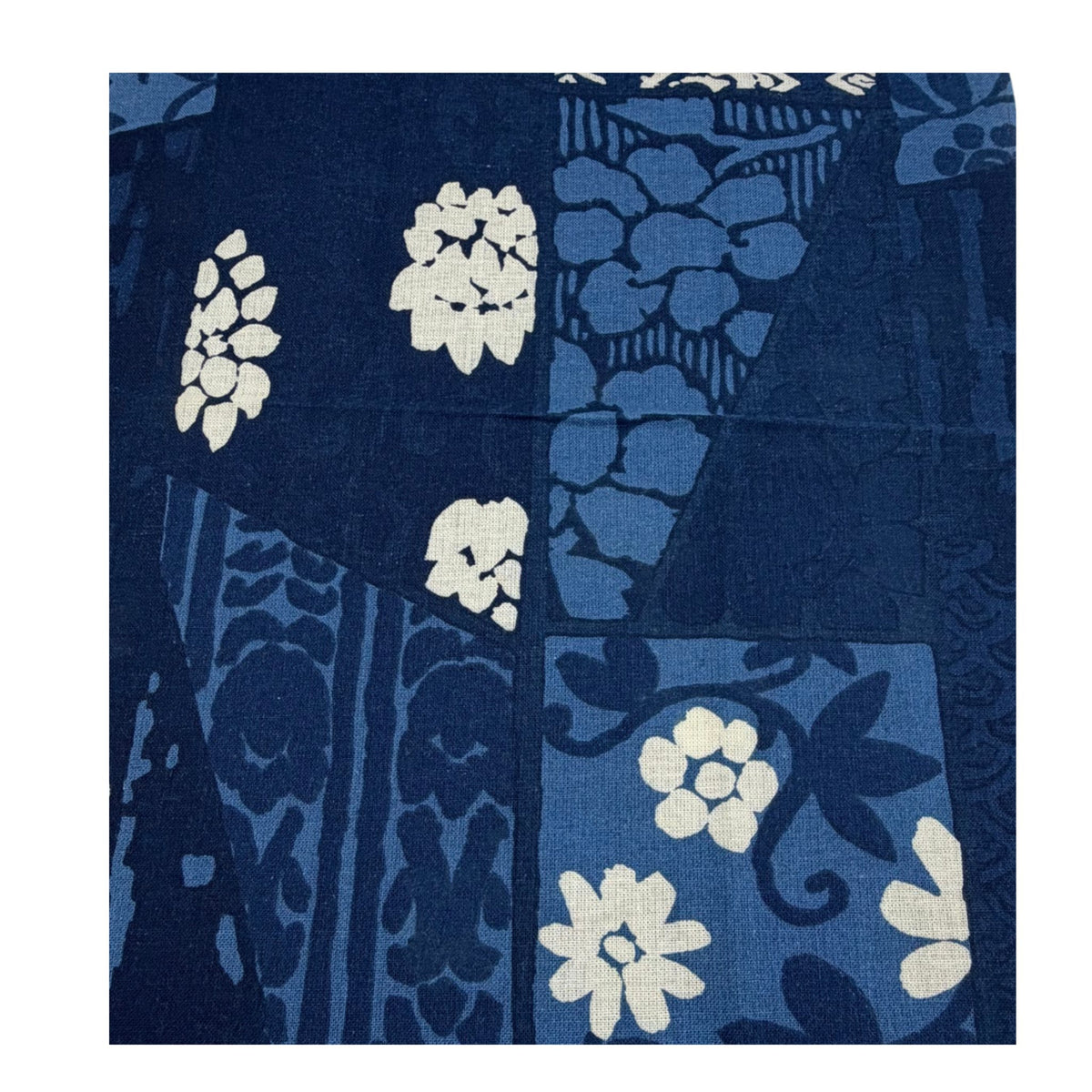
Indigo Tenugui Pair, Fujita Dyeing Factory, Kyoto — Peony Blossom and Uesugi Patchwork
Indigo Tenugui Pair, Fujita Dyeing Factory, Kyoto — Peony Blossom and Uesugi Patchwork
Couldn't load pickup availability
Two cotton tenugui, the Japanese hand towel, hand printed in natural indigo at the Fujita Dyeing Factory in Kyoto. One is Peony Blossom. The other recreates a patchwork kimono from the family of Uesugi Kenshin.
The story
There is an old Japanese saying: blue comes from indigo, yet is bluer than indigo. It describes the student who learns from a master and goes past him. In a craft whose methods were settled centuries ago, that is hard to do. Fujita Takehiro managed it.
Traditional indigo dyeing dips the whole cloth in the vat, which gives solid blue. A pattern meant blocking parts of the cloth with wax, or dyeing it solid and bleaching the pattern back out. Both were slow and costly.
At his family's dye house in Kyoto, Mr. Fujita developed a method called ai-nassen, a first in the industry. Natural indigo is mixed with a mordant into a paste, and the paste is printed through stencils. It is made in several strengths, so a single cloth can hold several blues. One Japanese magazine called it endless color within a single tone.
More than ten craftspeople work there, some for over thirty years. Every piece is still dyed by hand, one at a time. They adjust the paste for the day's heat and humidity, and the pressure on the squeegee takes years to learn. In Mr. Fujita's words, "the warmth of handwork is something a machine cannot copy."
Indigo stands up to sunlight and rubbing, so a tenugui is made to be used, and used for years.
What you can do with a tenugui
- Carry it as a handkerchief, in your bag or pocket.
- Tie it as a headband on a hot day or a busy one.
- Wrap a lunch box in it, the way bento is carried in Japan.
- Wrap a gift in it instead of paper. The wrapping becomes part of the gift.
- Hang it on a wall like a small scroll.
I found these at a SOU・SOU shop in Kyoto. SOU・SOU is a Kyoto brand, and the Fujita dye house prints tenugui with them. I brought home only two, each in a different pattern, and I am offering them together to my subscribers. Once they are gone, I don't have more.
Material and Care
- Fabric: 100% cotton, Ise cotton (Isemomen), raw and unbleached. Small dark specks in the cloth are plant fragments, a natural part of raw cotton.
- Size: each about 14 by 35 inches
- Dye: natural indigo, hand printed by the ai-nassen method
- Slight misalignment in the stencil pattern, and uneven color, come from the hand printing.
- The ends are left unhemmed, as tenugui traditionally are. They may fray a little at first and stop with washing.
- Natural indigo can fade or yellow slightly with use in hot, humid weather. Uneven color along the edges comes from the hand printing and steaming, and is part of the piece.
- Washing: machine wash in a laundry net, up to 104°F (40°C). The tag asks you not to hand wash.
- Wash it on its own the first few times. The indigo can transfer, so use a mild detergent and hang it to dry in the shade right after washing.
- No bleach. No dryer. Iron at medium heat.
- Made by: Fujita Senen (Fujita Dyeing Factory), Kyoto, Japan, for SOU・SOU. Made in Japan.
Share